
If you’ve been researching laser treatments, you’ve probably noticed two phrases used almost interchangeably: laser hair reduction vs removal. That wording can be confusing, especially when you’re trying to decide whether treatment is worth the time and investment. The truth is that these terms do not always mean the same thing, and understanding the difference helps you set realistic expectations from the start.
For most clients, the more accurate term is hair reduction. Laser treatments are designed to target the pigment in the hair follicle and significantly reduce how much hair grows back over time. In many areas, that can mean smoother skin, finer regrowth, fewer ingrown hairs, and much less shaving. But permanent, never-again hair loss on every follicle is not how the treatment works for most people.
That distinction matters because good results begin with good education. When you know what the treatment can and cannot do, you’re much more likely to feel confident in your plan and happy with your outcome.
Laser hair reduction means the treatment reduces the number of hairs that grow back and changes the quality of the remaining hair. Regrowth often becomes finer, lighter, slower, and more sparse. Many clients go from shaving daily or several times a week to barely thinking about the area at all.
Laser hair removal is the phrase most people know, and it’s still commonly used in the aesthetics industry. In practice, it usually refers to a series of laser treatments intended to achieve long-term reduction of unwanted hair. So while removal is the popular term, reduction is often the more medically honest one.
Why the nuance? Hair grows in cycles, and lasers only work on hairs in the active growth phase. Not every follicle is active at the same time, which is why a single session cannot treat every hair permanently. Hormones, genetics, age, and even the treatment area can also influence how much hair comes back later.
A trustworthy provider should never promise a completely hair-free future for every client. That is especially true for people with hormonal hair growth on the face, chin, neck, or body. Even after an excellent initial series, some follicles may become active later and produce new hair.
Using the term reduction is a way of being transparent. It reflects what laser treatment reliably offers: a major decrease in unwanted hair, easier maintenance, and smoother skin over the long term. For many women, that result is exactly what they want. They are not necessarily looking for perfection. They want less daily hassle, less irritation, and more confidence in their skin.
This is also why consultation matters. The right plan depends on your skin tone, hair color, hair thickness, medical history, and the area being treated. An experienced provider will explain the likely outcome for you, not just the ideal outcome on paper.
Most clients need a series of treatments spaced out over several weeks because the laser is catching different groups of hairs as they enter the right growth phase. After a few sessions, you may notice patches where hair stops returning, areas where growth slows significantly, and hair that feels softer and finer.
By the end of a full treatment series, many clients see a dramatic reduction. Underarms and bikini areas often respond especially well because the hair there tends to be darker and coarser. Legs can also improve beautifully, although larger areas may require patience. Facial hair can respond well too, but hormonal influences may mean more maintenance over time.
This is where expectations matter. Some people will have very little regrowth for long stretches. Others will still see some hair, but much less of it and with far less irritation than before. If your goal is to stop constant shaving, reduce bumps, and simplify your routine, laser can be a very worthwhile treatment.
Not all body areas behave the same way. Underarms, bikini line, and lower legs tend to be more predictable because the hair is often darker and more concentrated. These areas frequently show strong improvement with a standard treatment series and occasional maintenance.
The face is more complicated. Chin, upper lip, jawline, and neck hair can be influenced by hormones, which means new growth may develop even after successful treatment. That does not mean laser is ineffective. It means the goal is usually consistent reduction and easier management rather than a guarantee of permanent total removal.
Arms, back, chest, and stomach can also respond well, but the quality of the hair matters. Very fine or light hair is harder for the laser to target because there is less pigment to absorb the energy.
Laser works best when there is a strong contrast between the pigment in the hair and the surrounding skin, but technology has advanced significantly, and many devices can safely treat a wider range of skin tones than older lasers could. The key is choosing a provider who understands how to match the right settings and technology to your skin and hair.
Generally, darker, coarser hair responds best. Blonde, gray, white, and red hair are often more difficult to treat because they contain less of the pigment the laser needs to target. If you have a mix of hair types, your provider should be honest about which areas are likely to improve most.
A personalized consultation is especially important if you have melasma, a history of hyperpigmentation, sensitive skin, or a condition related to hormonal imbalance. Safe, effective treatment is never one-size-fits-all.
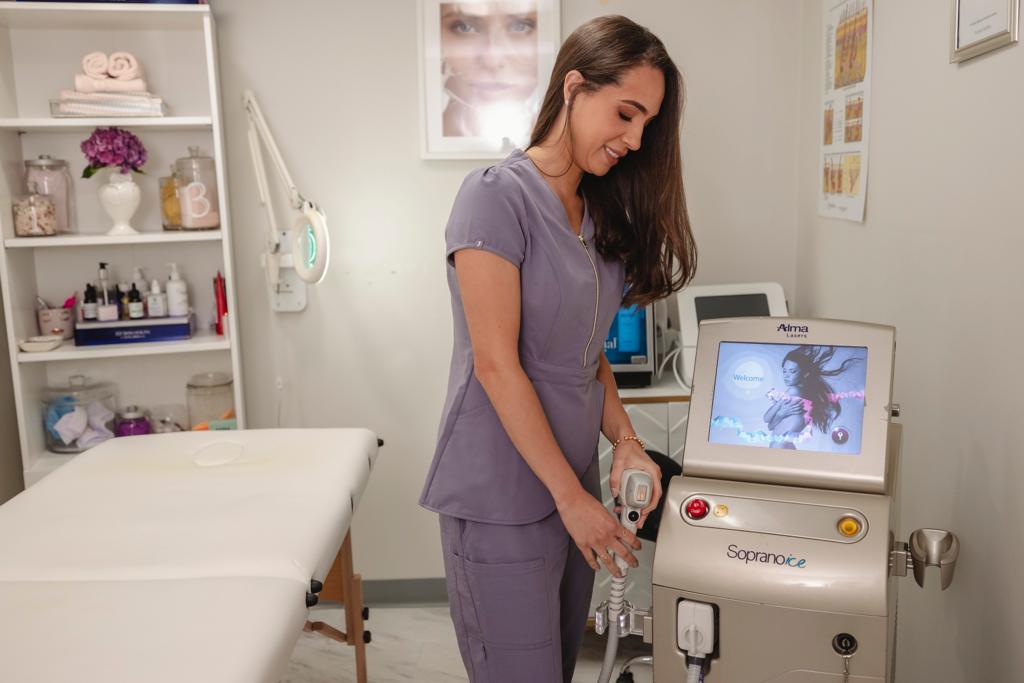
Laser hair treatment is quick in some areas and longer in others. Underarms may take only minutes, while full legs take more time. Most clients describe the feeling as a snap of heat against the skin. It is usually tolerable, and modern devices often include cooling features to improve comfort.
You will typically need to avoid waxing, tweezing, or threading before treatment because the follicle needs to be present for the laser to target it. Shaving is usually allowed and often recommended. Sun exposure also needs to be managed carefully, since recently tanned skin can increase sensitivity and affect treatment safety.
After treatment, mild redness or warmth can happen for a short time. Then the treated hairs begin to shed over the next couple of weeks. That shedding phase can be surprising if you are expecting immediate smoothness, but it is a normal part of the process.
One of the biggest misconceptions around laser hair treatment is that once your initial package is complete, you’re done forever. Some clients do enjoy very long-lasting results, but many benefit from maintenance sessions once or twice a year, depending on the area and their hormone profile.
That does not mean the treatment failed. It means the body changes, and hair growth can shift over time. Pregnancy, perimenopause, PCOS, and other hormonal changes can all affect regrowth. Maintenance is often the difference between good short-term results and consistently smooth, low-maintenance skin over the long term.
This is why a relationship-based approach matters. At New Beauty Aesthetics, treatment planning is centered on your real life, your goals, and what ongoing maintenance may look like for you, rather than promising an unrealistic finish line.
For many women, absolutely. If you’re spending years shaving, dealing with razor burn, covering ingrown hairs, or feeling frustrated by fast regrowth, a major reduction can feel life-changing. Even when some hair remains, the difference in texture, density, and frequency of growth often makes everyday life much easier.
There is also a skin health benefit. Less shaving and fewer ingrown hairs can mean calmer skin, less discoloration from repeated irritation, and more confidence wearing what you want without planning around hair removal.
The right mindset is to think in terms of improvement, not perfection. When you approach treatment that way, the results tend to feel much more satisfying.
If you want a treatment that reduces unwanted hair significantly, minimizes daily upkeep, and supports smoother skin over time, laser is worth considering. If you are expecting every hair follicle to disappear forever with no maintenance, you may feel disappointed unless those expectations are clarified early.
The best next step is a consultation with a qualified provider who will assess your skin, hair, and goals honestly. You deserve clear answers about likely results, number of sessions, comfort, timing, and maintenance before you commit.
The best treatment plans are not built on big promises. They are built on trust, education, and a realistic path to feeling more comfortable and confident in your skin.
Newbeauty Aesthetics
Over $1.000 in value
INCLUDED EVERY MONTH:
Your Choice of One:
MEMBERS-ONLY PERKS:
Add Fotona Laser for only $200/month 20% OFF Halo Laser & BBL Laser Treatments
$50 Birthday Credit (toward any procedure)
Earn Rewards via Alle App (Botox loyalty program)
6-Month Commitment Required
Perfect for consistent skin rejuvenation and wellness support-with exclusive member pricing on upgrades and advanced treats.
315 Main Street, Melrose, MA 02176 • 731-526-3265