
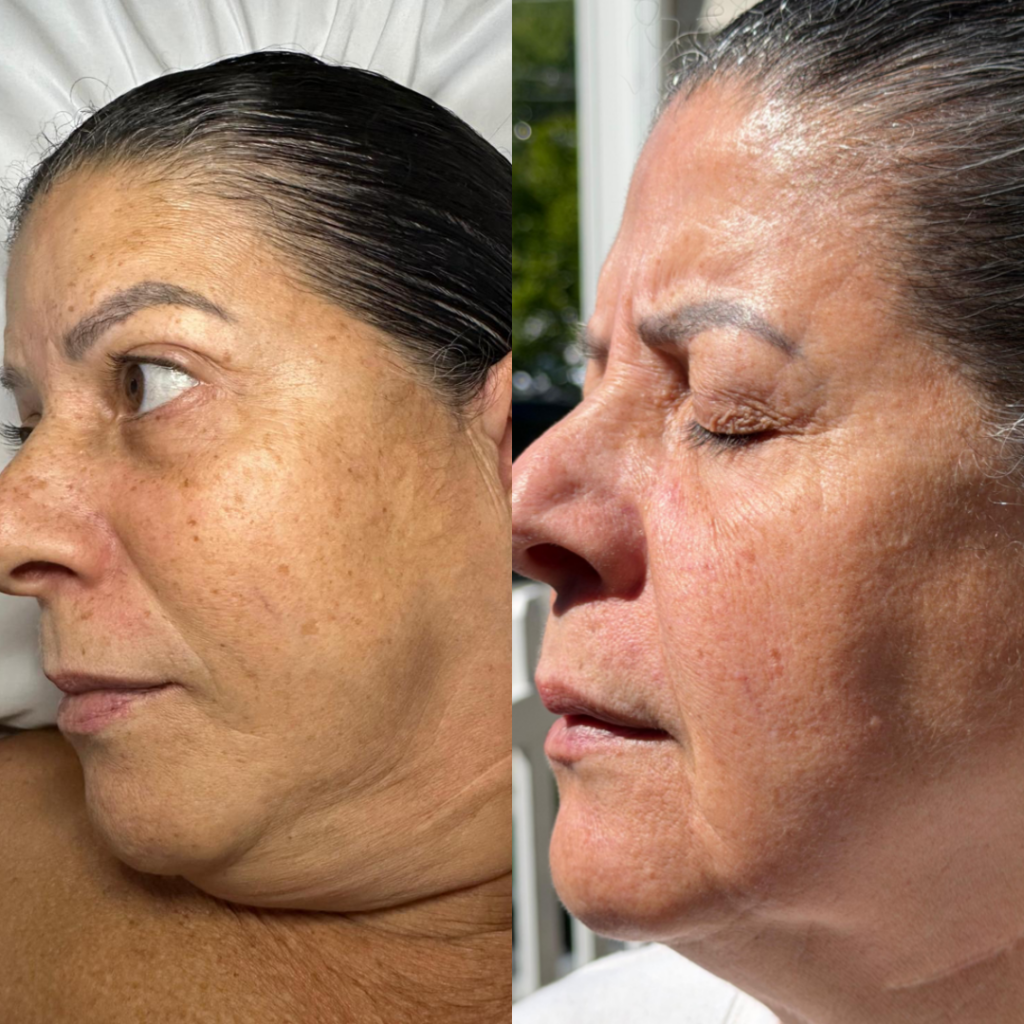
You wore the sunscreen, spent a little more time outside than planned, and now your skin looks uneven in places that were not there in June. Hyperpigmentation after summer is one of the most common concerns we see once the weather shifts, and it can show up as dark patches, lingering acne marks, melasma flare-ups, or a general blotchy tone that makes skin look tired.
The frustrating part is that summer pigment does not always appear right away. Sun exposure can bring existing discoloration to the surface slowly, and heat itself can aggravate pigment-prone skin, especially if you deal with melasma. By early fall, many people feel like their complexion changed all at once. It usually did not. It built up over weeks.
Pigment is your skin’s response to inflammation and UV exposure. When melanocytes, the cells that produce pigment, get stimulated, they can overproduce melanin. That extra melanin does not always spread evenly, which is why you see spots or patches instead of a uniform tan.
Summer creates the perfect setup for this. UV exposure is the obvious trigger, but it is not the only one. Heat, visible light, friction, hormonal shifts, and breakouts can all contribute. If you are prone to post-inflammatory hyperpigmentation, even a few acne flare-ups can leave behind marks that last much longer than the breakout itself.
This is also why two people can spend the same afternoon outside and have completely different outcomes. Skin tone, genetics, hormonal influences, current skincare, and treatment history all affect how pigment develops. There is no single fix because there is no single cause.
This matters more than most people realize. Not all discoloration responds the same way, and using the wrong approach can waste time or even make pigment harder to treat.
Sunspots, sometimes called solar lentigines, tend to appear as distinct brown spots in areas that get repeated sun exposure like the cheeks, forehead, chest, and hands. Post-inflammatory hyperpigmentation usually follows acne, irritation, or a skin injury and can look pink, red-brown, or deep brown depending on your skin tone. Melasma tends to show up in more diffuse patches, often on the cheeks, upper lip, forehead, or jawline, and is heavily influenced by hormones and heat.
If your pigment has soft edges, seems to worsen every summer, or gets darker with heat even when you are careful outdoors, melasma may be part of the picture. That is important because melasma often needs a gentler, more strategic plan. Aggressive treatment is not always better.
When clients want to fade hyperpigmentation after summer, the first instinct is usually to exfoliate harder or start several brightening products at once. That can backfire. Irritated skin is more likely to produce more pigment, not less.
Start by calming the skin barrier and protecting it daily. A broad-spectrum SPF is non-negotiable, but application matters just as much as the formula. If you are not using enough, reapplying, or protecting during driving and errands, pigment can linger much longer than expected. Hats and shade help more than people think, especially for melasma-prone skin.
At home, a targeted brightening routine works best when it is consistent and not overly complicated. Ingredients like vitamin C, tranexamic acid, azelaic acid, niacinamide, kojic acid, and carefully selected retinoids can all be useful depending on the type of discoloration and how sensitive your skin is. Some people do well with hydroquinone under professional guidance, but it is not the right long-term answer for everyone.
What matters most is choosing a plan your skin can tolerate. A product that is powerful but leaves you red, tight, or flaky may slow your progress. In pigment management, patience usually beats intensity.
Usually longer than people want. Superficial pigment may improve within several weeks with the right home care, while deeper or hormonally driven pigment can take months. If the discoloration has built up over multiple summers, expect a longer timeline.
This is where realistic expectations matter. You may see gradual brightening before you see complete clearing. Skin can look more even, smoother, and fresher well before every spot disappears. That is still meaningful progress.
The goal is not only to fade existing pigment but to reduce the cycle that keeps bringing it back. That usually means combining corrective treatment with maintenance, especially if your skin is naturally pigment-prone.
If you have been consistent with skincare and sunscreen and your pigment is not improving, professional treatment can make a real difference. The key is choosing the right modality for your skin type, your pigment pattern, and your level of sensitivity.
Customized facials and Hydrafacial treatments can be a good starting point when the skin is dull, congested, or mildly uneven, especially if you need a reset without significant downtime. These are not usually the only answer for stubborn pigmentation, but they can support healthier cell turnover and improve how your skin responds to active skincare.
For more visible discoloration, laser and light-based treatments may be considered, but not every pigment concern should be treated aggressively. Some laser approaches work beautifully for sun damage and discrete brown spots. Others need extra caution if melasma is involved, because heat can trigger rebound pigmentation.
That is why consultation matters. A provider should look at whether your pigment is epidermal or deeper, whether inflammation is present, how your skin has reacted in the past, and what your daily sun exposure looks like. A personalized plan is not a luxury here. It is the safest way to get results.
At New Beauty Aesthetics, this type of treatment planning is part of the process because pigment is rarely just a one-appointment issue. The best outcomes usually come from combining in-clinic care with the right home routine and adjusting as the skin responds.
A lot of pigment setbacks happen with good intentions. Scrubs, harsh peels, overuse of acids, and strong retinoids introduced too quickly can all create irritation that keeps skin in a reactive state. Picking at breakouts is another major reason dark marks linger.
It is also smart to be careful with heat exposure. Hot yoga, steam, and prolonged sun on the face can be enough to worsen melasma in some people, even if they are diligent with SPF. That does not mean you need to avoid every warm environment forever. It means noticing your triggers and adjusting when needed.
There is a reason so many pigment treatments are started after summer. Lower UV exposure makes it easier to treat discoloration safely and maintain results. If you have been waiting to address dark spots, uneven tone, or melasma flare-ups, fall is often the most practical window.
That said, treatment season should not turn into treatment amnesia. If you clear pigment during the cooler months and then relax your sun habits in spring, it often comes back faster than expected. Maintenance is part of successful pigment care.
Pigmentation: It’s More Real Than You Think ✨ Your skin tells a story — and sometimes that story includes pigmentation. Dark spots, uneven tone, freckles, and changes in your skin can happen for so many reasons. Hormones, sun exposure, stress, aging, and even everyday life can affect how your skin looks and feels. And yes… it can be frustrating. 💜 Pigmentation is not just about appearance — it can affect confidence too. When your skin changes, it’s normal to feel like something is “off” or wonder why your favorite products aren’t working like they used to. The good news? Your glow is not gone. ✨ The key is understanding your skin and creating a plan that actually supports it. The Glow Plan 🌸 ✨ Be consistent Skincare results don’t happen overnight. Your skin needs time and consistency to improve. ☀️ Protect daily Sunscreen is your best friend when it comes to preventing pigmentation from getting worse. 💎 Treat smart The right treatments and products can help target uneven tone while respecting your skin barrier. ⏳ Give it time Real skin transformation takes patience — but small steps create big changes. Remember: pigmentation doesn’t define your skin. It’s just part of your skin’s journey. Your goal isn’t perfect skin — it’s healthy, confident, glowing skin that feels like you. 🤍 At Newbeauty Aesthetics, we believe every skin story deserves a personalized plan
Newbeauty Aesthetics
Over $1.000 in value
INCLUDED EVERY MONTH:
Your Choice of One:
MEMBERS-ONLY PERKS:
Add Fotona Laser for only $200/month 20% OFF Halo Laser & BBL Laser Treatments
$50 Birthday Credit (toward any procedure)
Earn Rewards via Alle App (Botox loyalty program)
6-Month Commitment Required
Perfect for consistent skin rejuvenation and wellness support-with exclusive member pricing on upgrades and advanced treats.
315 Main Street, Melrose, MA 02176 • 731-526-3265